
Game viewing etiquette during peak season in the Kruger National Park
Peak season in the Kruger brings busy roads and crowded sightings. Moving with patience and respect, however, creates a calmer and more rewarding experience for everyone.
Travelling through the Kruger National Park during peak season brings a lively, layered rhythm to the experience. Peak season generally falls between mid-December and early January, when South African families travel through the park, though busy weeks also occur around Easter and long weekends.
Roads south of Tshokwane often carry the heaviest traffic, particularly around well-known waterholes such as Sunset Dam near Lower Sabie and the Mlondozi lookout.
Game viewing begins with the simple act of approaching a sighting. Drivers reduce speed well before reaching a cluster of vehicles. This allows enough time to judge the flow and prevents sudden halts that block the road. Travellers who ease into position without disrupting others contribute to a smoother, safer environment.
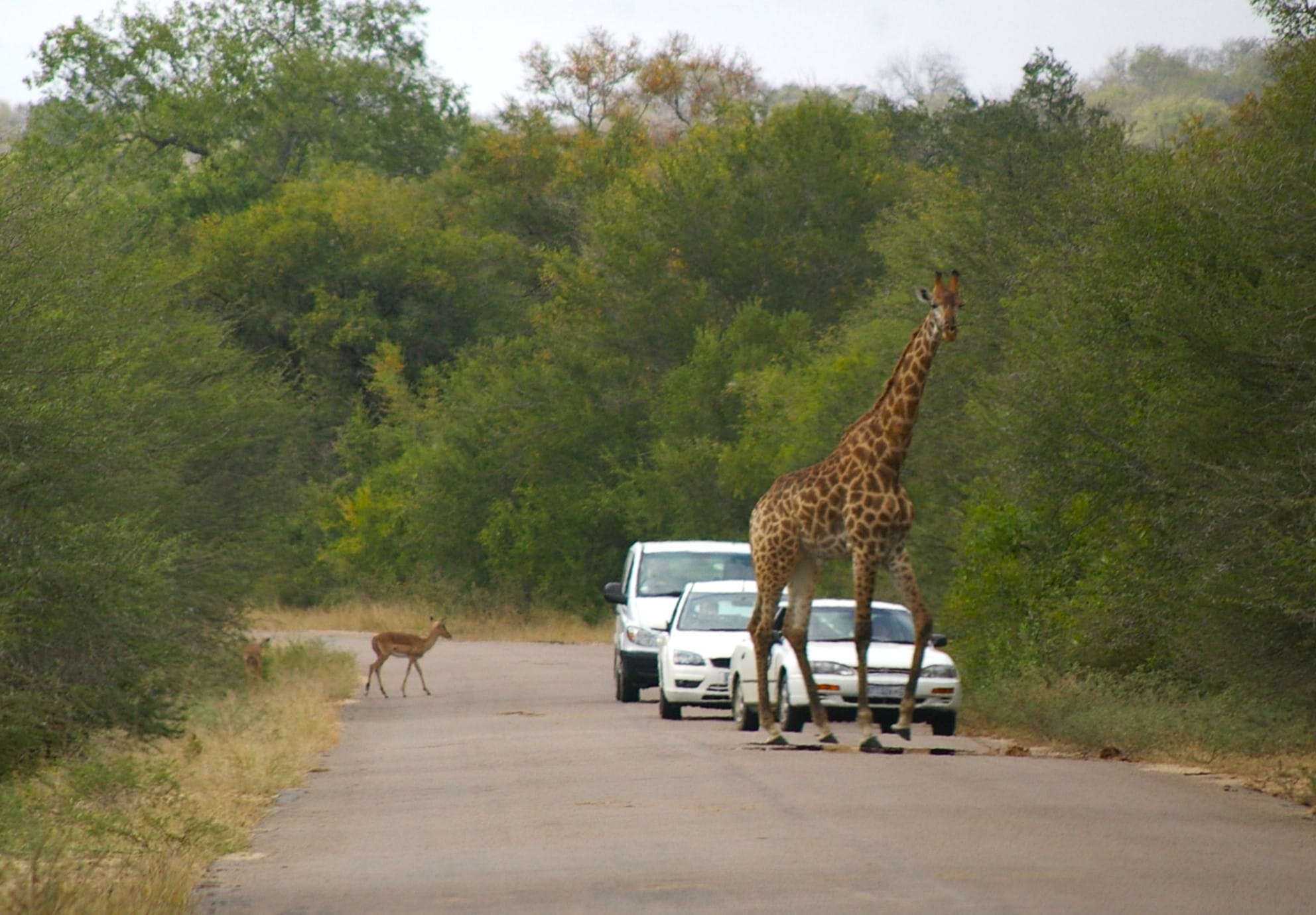
Many experienced visitors follow the principle of leaving space for cars behind them to pass if the sighting is full. A short pause often opens up a clearer view without creating tension.
Rotating positions at busy sightings helps maintain a respectful atmosphere. When an elephant bull feeds near the S65 towards Transport Dam or a leopard sprawls across a marula branch close to the H4-2, cars often gather quickly. Travellers who have enjoyed a few minutes at the front usually reverse slightly or move forward to open the view for others.
Respect for animal space is central to responsible viewing. Vehicles should keep a comfortable distance that allows wildlife to behave naturally. Crowding elephants or driving too close to wild dogs can influence their behaviour and compromise safety.
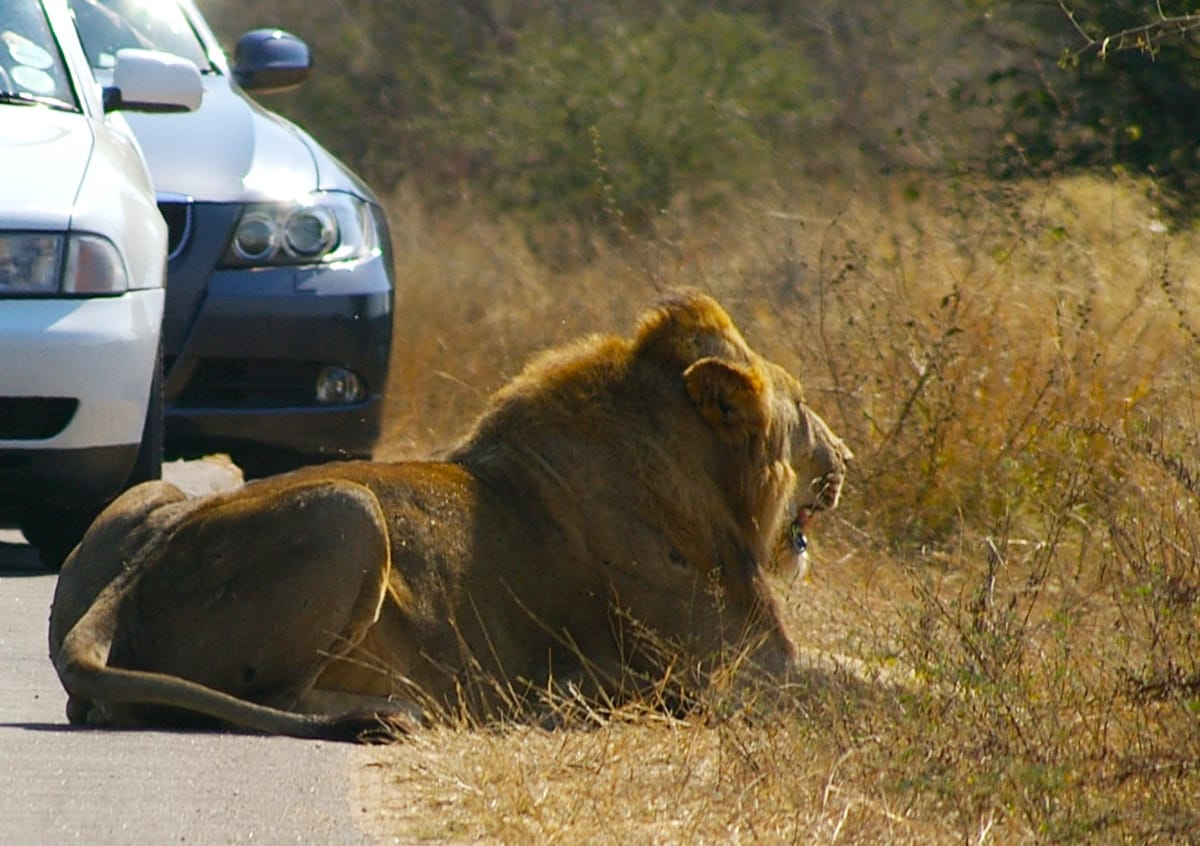
Rangers repeatedly emphasise the importance of maintaining escape routes for animals, especially predators crossing the road. When a lion pride walks along the H1-3, cars that pull to the side and leave space ahead create a smooth passage.
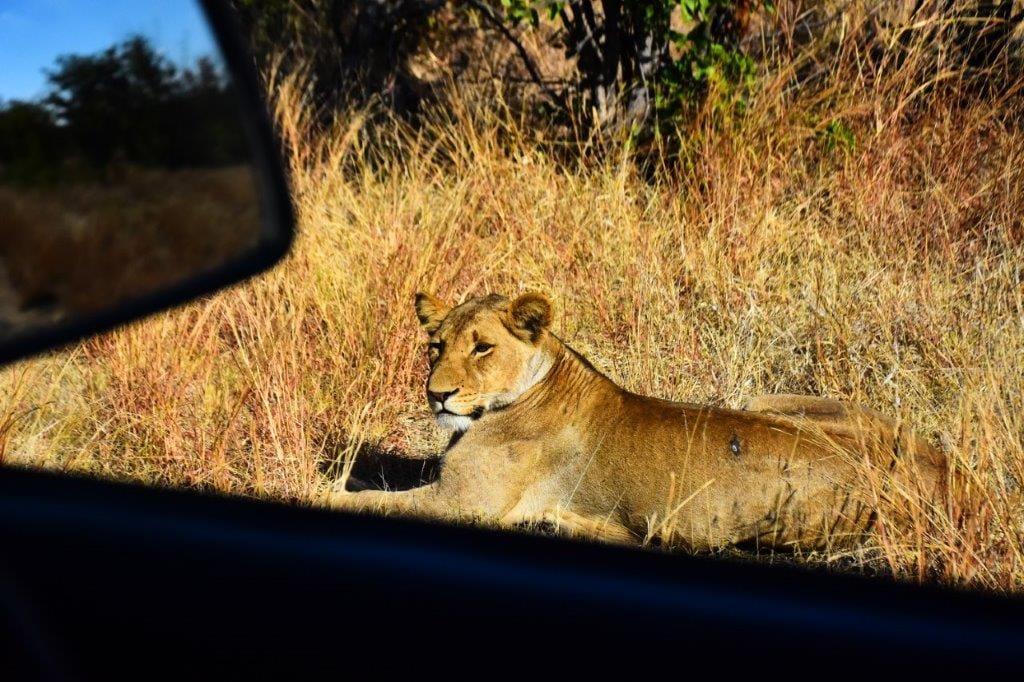
Parking considerations also shape etiquette. Stopping on a bend, blocking both lanes, or using the wrong angle near a busy sighting causes frustration and potential accidents. Travellers who angle their vehicle neatly, remain aware of their surroundings, and avoid blocking others help maintain harmony on busy roads.
🔴 You might also like:
 Mariana Balt
Peak season highlights the importance of patience. Travellers may wait several minutes before finding a gap to view a leopard near Skukuza or a herd of buffalo at Nkuhlu. Accepting the slower pace allows the experience to unfold naturally.
The park’s rules for behaviour at sightings are designed not only to protect you but also to preserve the natural rhythm of the bush and ensure that everyone sharing the road enjoys the experience.
First and foremost, Kruger visitors must remain in their vehicles at all times unless in a designated area. Stepping out of a car to take a closer photo of a pride of lions near the H1-3, for example, is not only dangerous but also prohibited by park regulations.
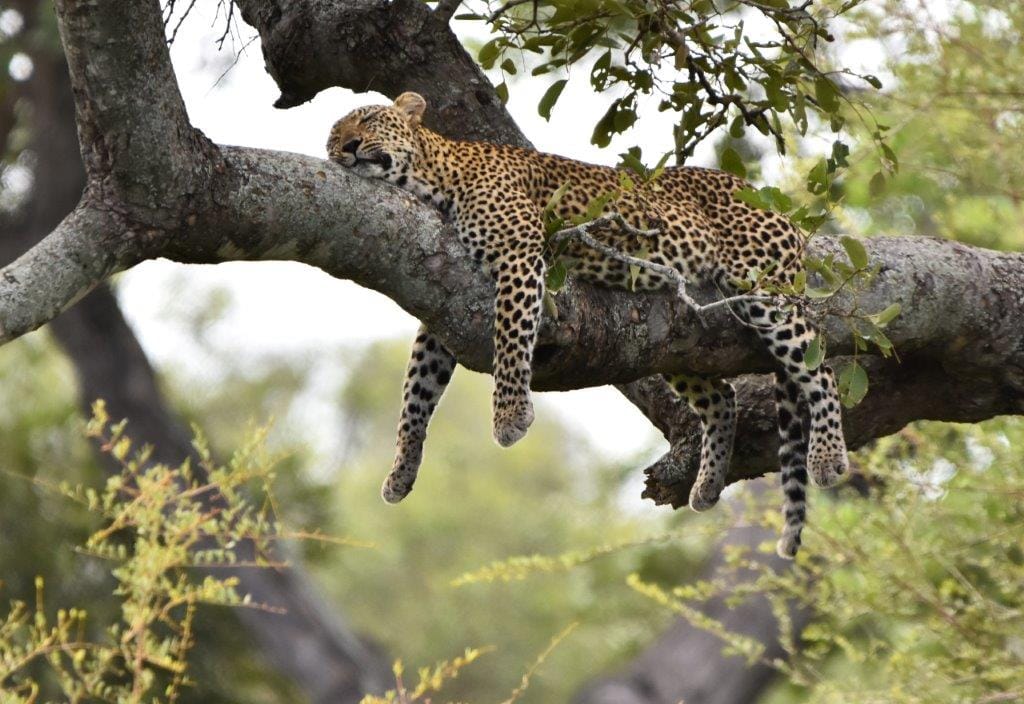
Rangers have enforced this rule with fines when tourists exited their vehicles at a sighting, highlighting that wild animals are unpredictable and potentially life-threatening when approached on foot.
Within your vehicle, no part of your body may protrude from a window or sunroof. Doors should remain closed at all times, and you should lower the volume of any music or conversation so that your presence does not disturb wildlife or other visitors.
Approach a sighting slowly and with awareness. When animals are on or near the road, you should stop at least twenty metres away. This distance gives the animal room to move freely and ensures that neither you nor your vehicle becomes a source of stress or disruption to their behaviour.
Vehicles should remain on the designated road surface with at least two tyres on the track and clear space left on the side furthest from the animals so other vehicles can pass or join the viewing without blocking the road.
Equally important is respect for other people at the sighting. Kruger’s regulations and guides emphasise that vehicles should not block the road or park diagonally in a way that prevents movement. Pulling neatly to the side in the same direction as traffic and leaving the opposite lane open are simple gestures that keep traffic flowing and allow everyone the chance to see the animals.
Feeding, teasing or attempting to attract animals with noise is forbidden. Wildlife should be allowed to continue its natural habits uninterrupted by human influence. Radios, loud voices and any attempt to lure an animal for a better photograph are not only poor etiquette but also contravene park rules designed to protect both animals and people.
In Kruger, viewing wildlife is not a race or competition. It is a shared moment in a shared landscape. Following the rules at sightings maintains safety, protects animals’ comfort, and fosters a culture of consideration that makes each visit to this rich and storied park more rewarding.
🔴 You might also like:
 Mariana Balt
Comments ()